
The Hands
Behind the Craft
A story of marble, memory, and the makers who give it meaning.
"We do not make objects. We make moments — the kind that sit on your table and remind you of what beauty feels like."— Founder, Aakaara
A journey to Agra
Aakaara began with a visit to the marble workshops of Agra — small family studios tucked behind the chaos of the tourist trail, where craftspeople were producing extraordinary work with almost no market reach.
We saw an opportunity: not to "help" artisans, but to partner with them as equals, co-create products rooted in their traditions, and build a brand that honoured both the craft and the craftsperson.
The name Aakaara comes from the Sanskrit word for "form" — the moment potential becomes shape.
Master of the Marble
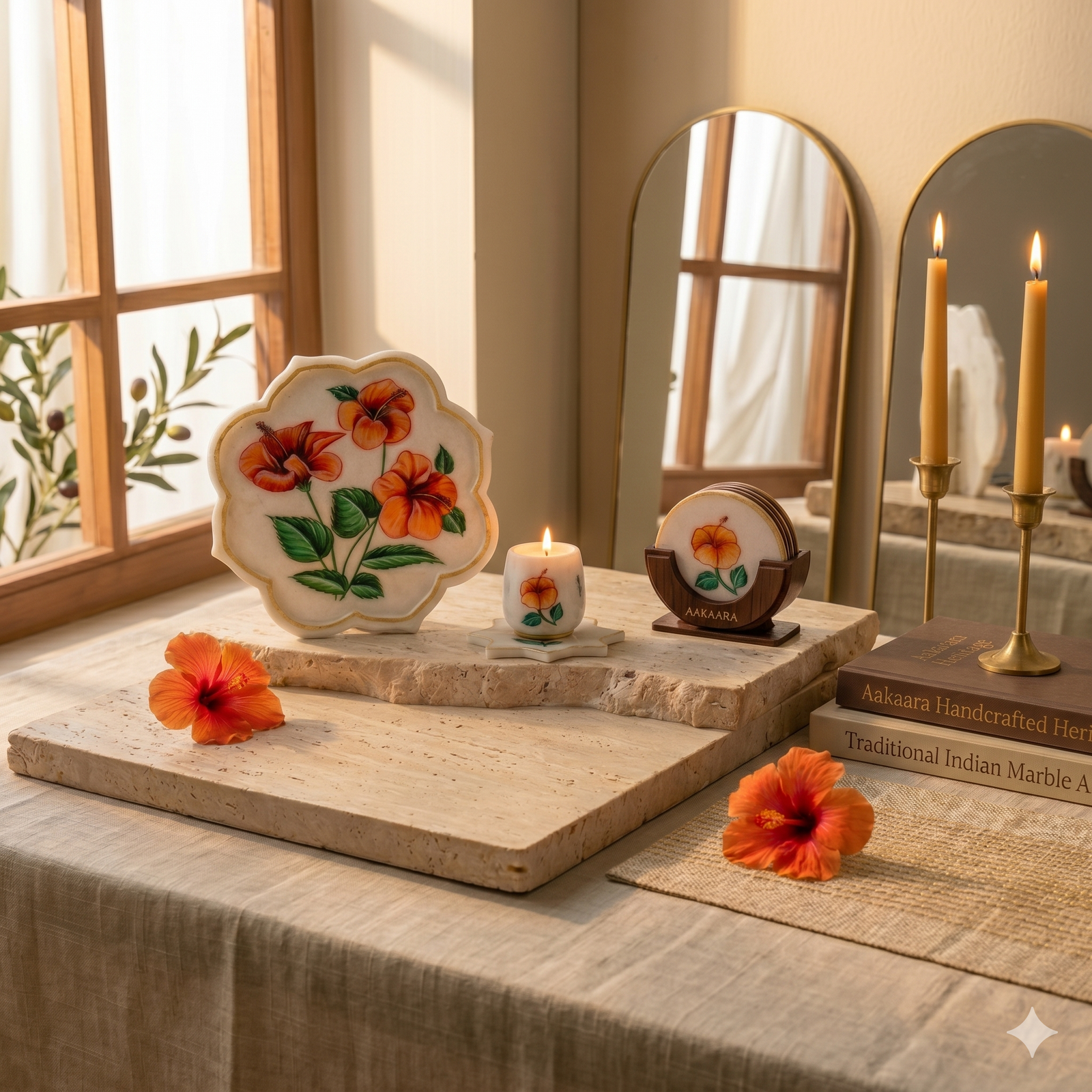
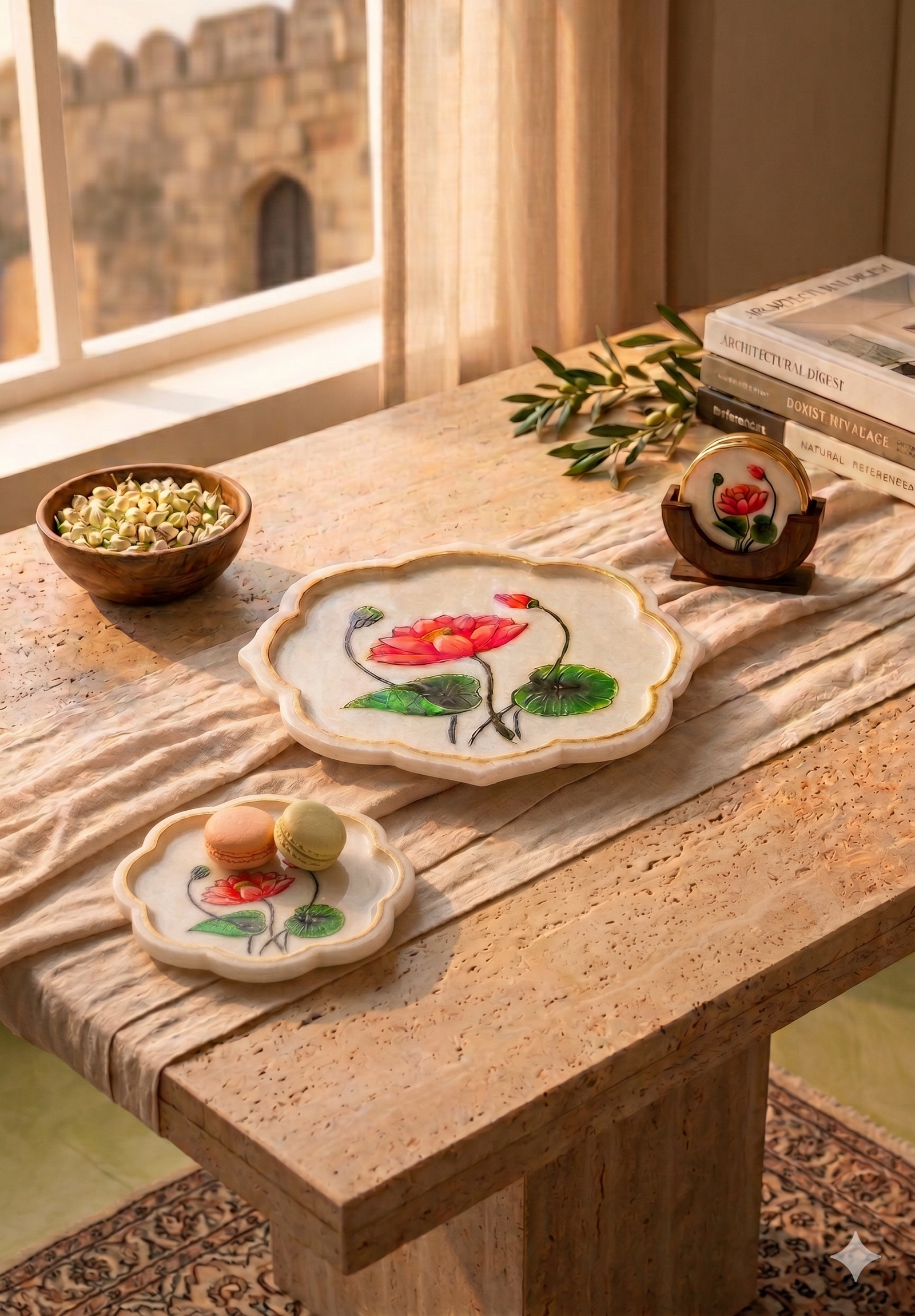
Our lead artisan has spent over thirty years perfecting the pietra dura technique — the same inlay method used in the construction of the Taj Mahal. He works with semi-precious stones, mineral pigments, and tools his father left him.
Today, his workshop employs twelve craftspeople from the local community. Every Aakaara piece passes through his hands before it leaves the studio.
Ustad Ramzan Ali & WorkshopThe craft, step by step
Sourcing the Stone
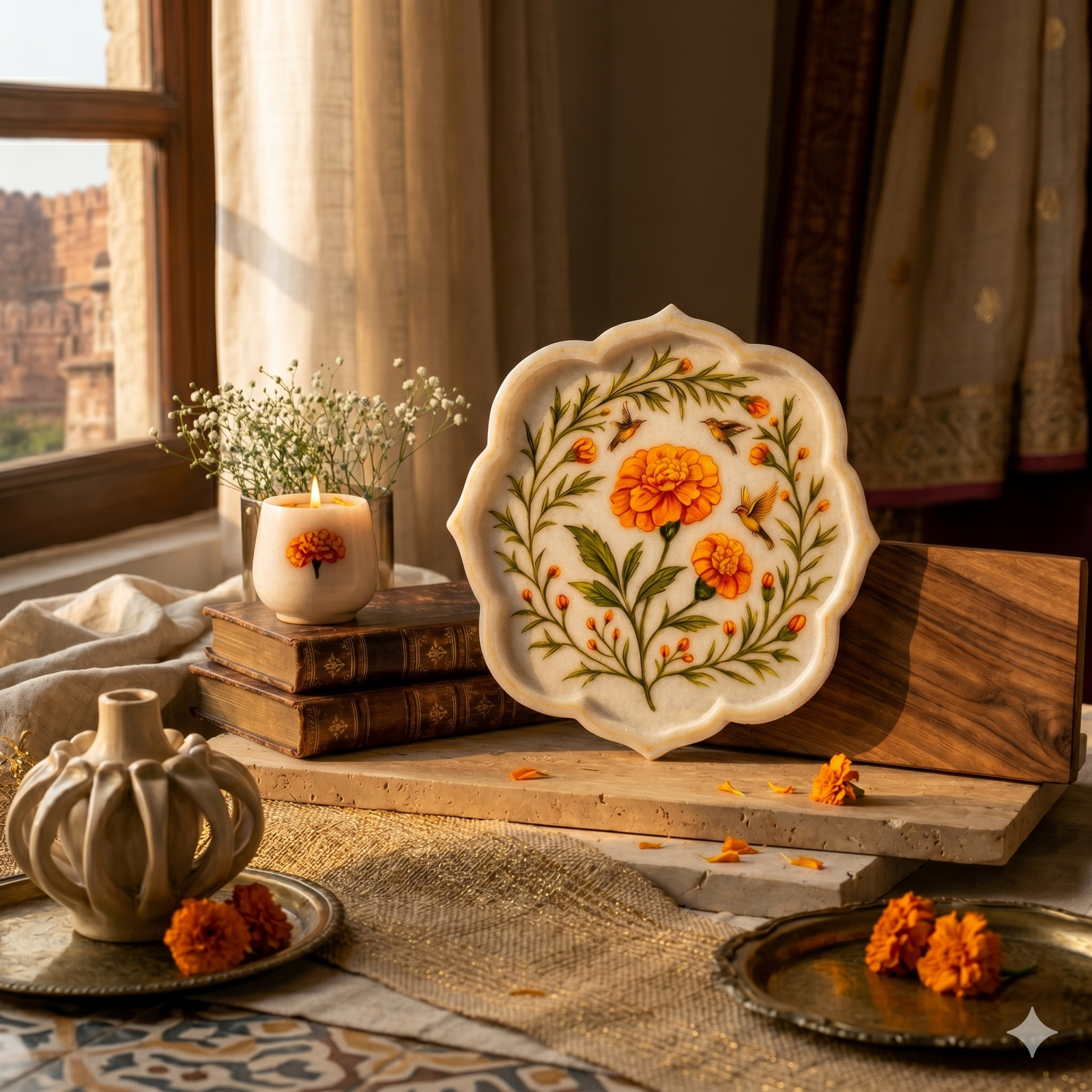
Makrana marble — the same stone used in the Taj Mahal — is selected by hand from ethical quarries in Rajasthan. Each slab is assessed for density, colour, and grain before cutting.
Hand Painting & Inlay
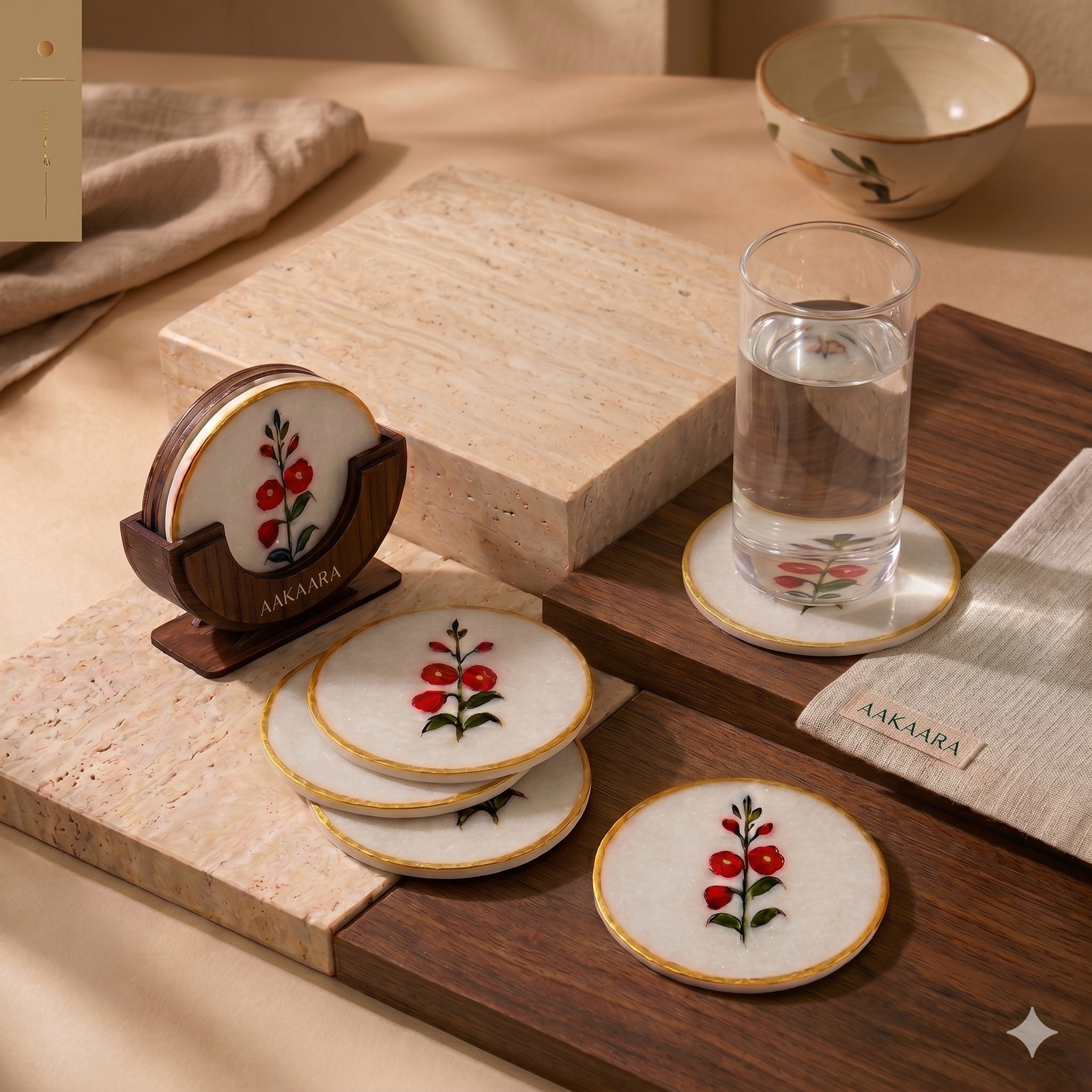
Motifs are drawn by hand, then painted with mineral pigments using brushes of a single bristle. The inlay work involves cutting channels into the marble and filling them with semi-precious stone.
Finishing & Dispatch
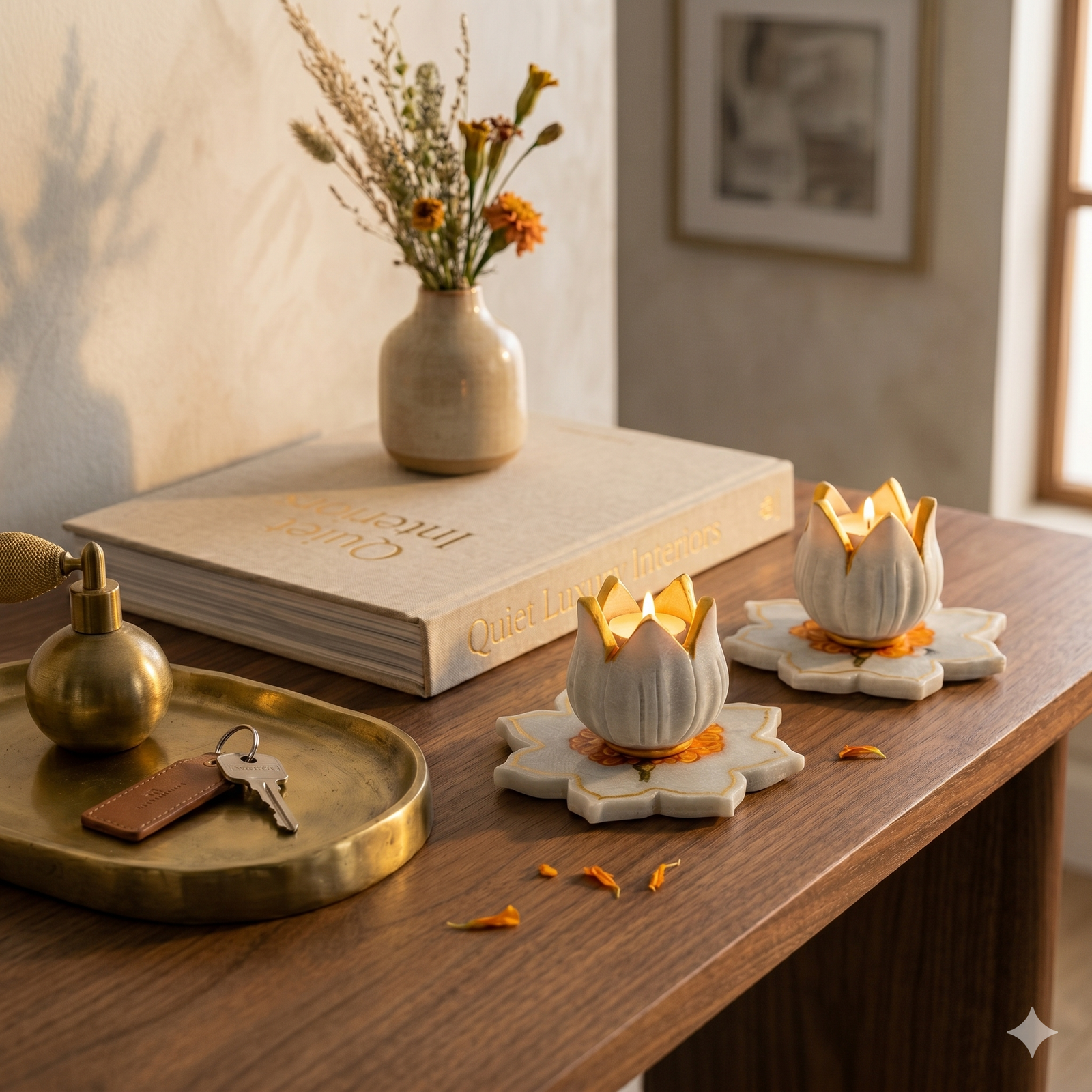
Each finished piece is polished, quality-checked, and signed by the artisan. Packaged in kraft paper, fabric, and a hand-written story card — ready to become part of your home.
Our values
Tradition honoured
We do not modernise craft; we contextualise it. Every technique we use is centuries old. We only change who it reaches.
Makers as partners
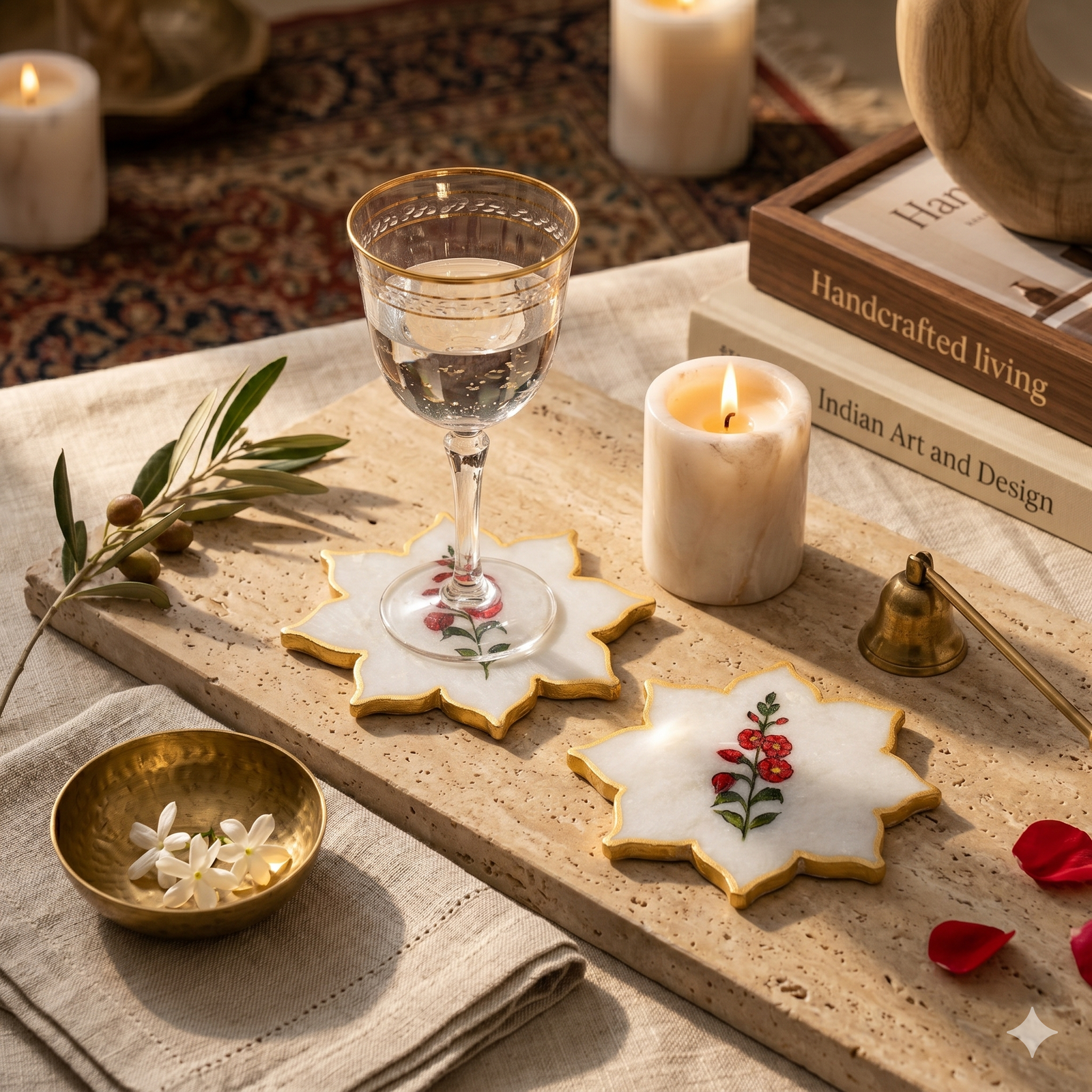
Our artisans receive above-market rates and a share of profits. We believe beautiful objects begin with fair relationships.
Made to be kept
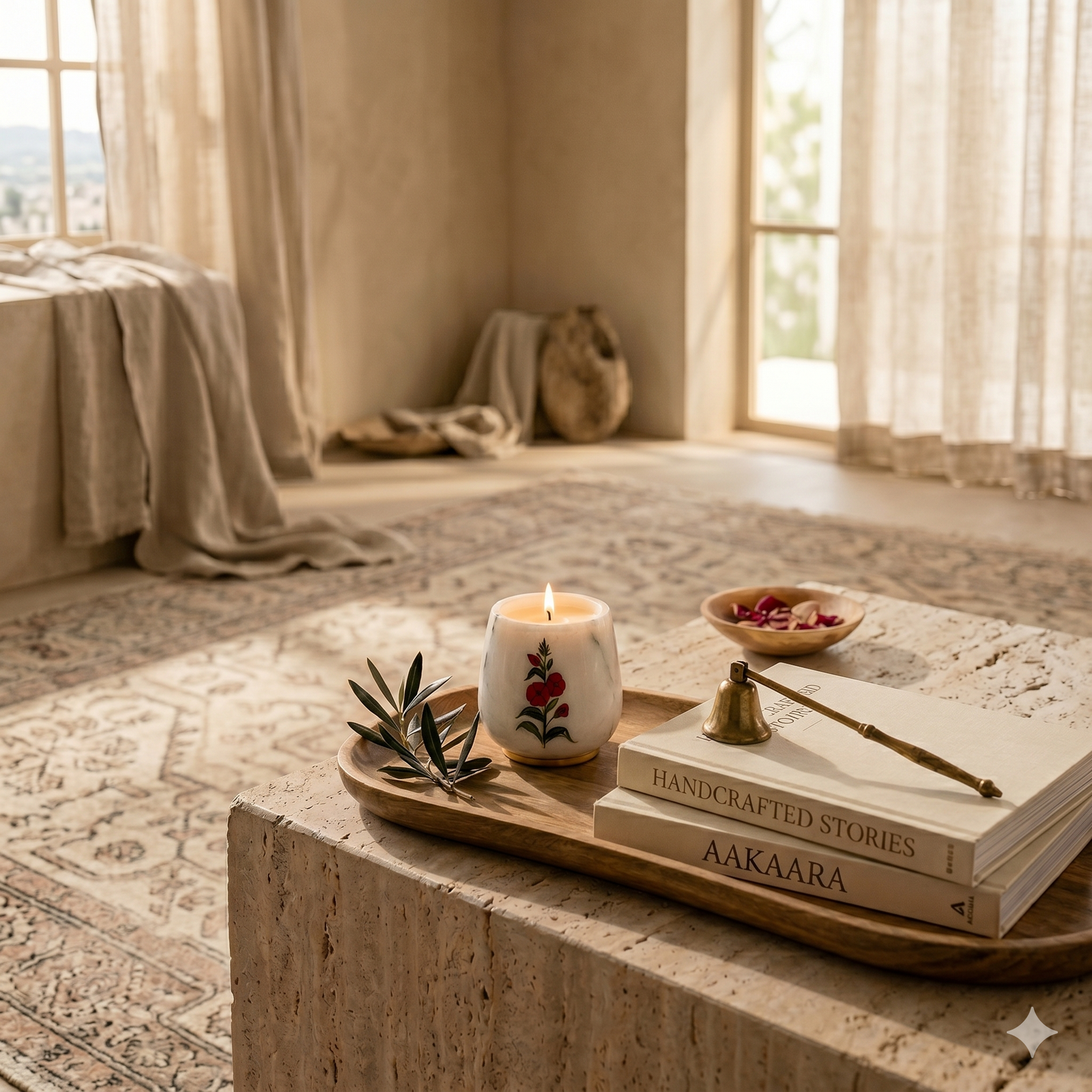
We make nothing disposable. Every Aakaara piece is designed to be handed down — and to become more meaningful with time.
Handcrafted for your story
Every piece carries the memory of the hands that made it — and now, the story of the home it belongs to.